About Smink Studio
1. What is Smink Studio?
2. Who set up Smink Studio?
3. Who is in the Smink Studio team?
4. Where are Smink tiles made, and by whom?
5. Where is Smink Studio based, and can I visit?
6. Which countries does Smink Studio deliver to?
7. What kinds of projects does Smink Studio work on?
8. How is Smink Studio different from other handmade tile makers?
9. Are Smink tiles sustainable?
1. What is Smink Studio?
Smink Studio is a Dutch design studio that creates bespoke installations of handmade ceramic tiles. Based in Utrecht, in the Netherlands, it designs every tile layout to a client’s brief and dimensions, and its tiles are made to order by hand in a partner studio in Portugal. Its clients range from homeowners to restaurants, hotels and international retailers.
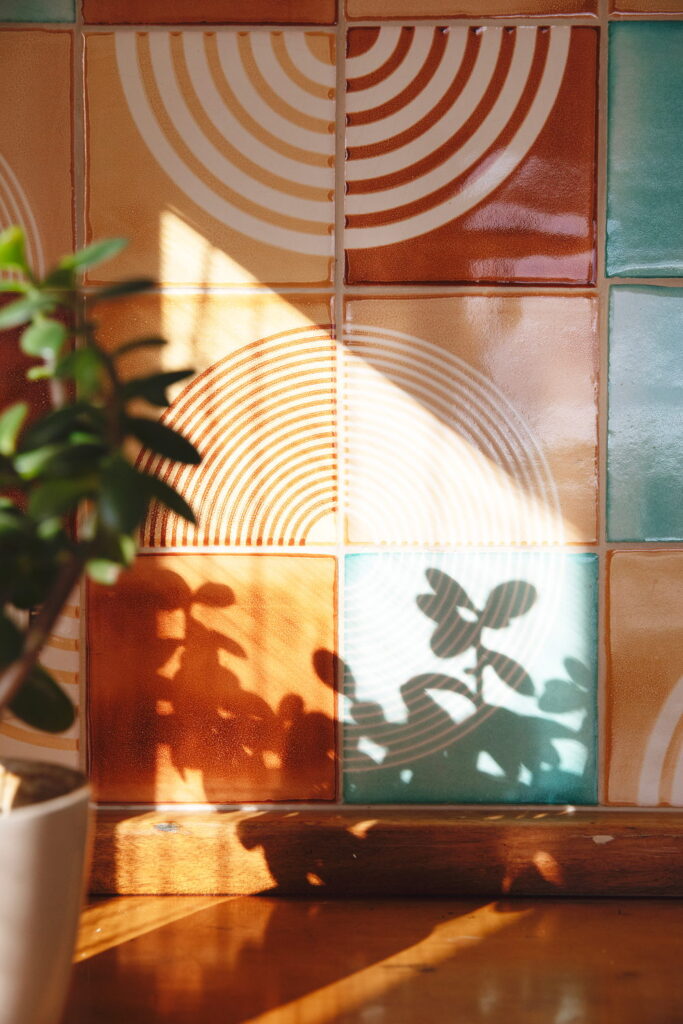
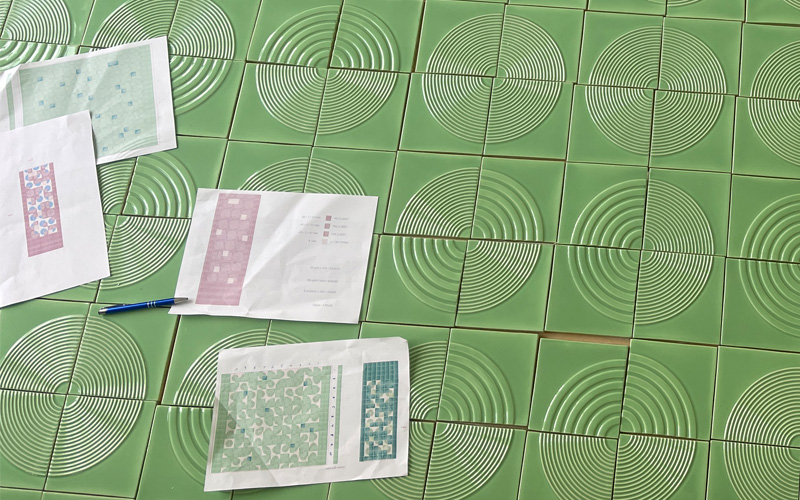
The studio is known for screen-printed handmade tiles in graphic, softly coloured patterns, and for Relief tiles with geometric shapes pressed into their surface. Every project starts with sample tiles and ends with a layout design drawn for that particular space.
2. Who set up Smink Studio?
Smink Studio was founded in 2013 by Marianne Smink, a designer with a background in print design. She loves everything that is hand-crafted and subtly imperfect, and Smink Studio is an expression of that: carefully designed graphic patterns on tiles whose character comes from the hands that made them.
3. Who is in the Smink Studio team?
Smink Studio is a small team. Marianne Smink founded the studio and leads its design. Jackie has worked with Marianne since the studio’s early days and is based in the UK. Jonathan, Marianne’s husband, joined in 2021. Soraia, the newest member of the team, brings a wealth of experience and is based in Portugal, close to where the tiles are made.
4. Where are Smink tiles made, and by whom?
Smink Studio tiles are made by hand in a partner studio in rural Portugal, a country with one of Europe’s longest traditions of decorative tilemaking. Skilled craftspeople form, glaze, screen-print and fire each tile to order. Smink Studio designs the patterns, colours and layouts in Utrecht; the Portuguese studio makes every tile for that specific project.
Watch how the tiles are made: Smink Studio tile production (video).
5. Where is Smink Studio based, and can I visit?
Smink Studio is based in the centre of Utrecht, in the Netherlands. It is a working design studio rather than a showroom and, like most studios, it can be a little disorganised. The team are designers, not salespeople, so they prefer to help clients by sending sample tiles, which can then be seen in the room where they will be installed.
If a visit really is essential, get in touch and the team will see whether it can be arranged.
6. Which countries does Smink Studio deliver to?
Smink Studio delivers worldwide. Most of its clients are in the United States, the European Union, the United Kingdom, Canada, the United Arab Emirates, Australia and Saudi Arabia. Tiles are shipped directly from the studio in Portugal by sea or air freight, and the team obtains a transport quote for every destination before an order is confirmed.
7. What kinds of projects does Smink Studio work on?
Smink Studio tiles are used wherever a surface needs tiling, indoors and outdoors. Typical projects include kitchen splashbacks (backsplashes), bathrooms and showers, restaurants, cafés and bars, hotels, shops and hallways. The tiles also suit fireplaces, stair risers, bar fronts, furniture and the outside of buildings. Every project, from a single splashback to a chain of shops, receives its own layout design.
8. How is Smink Studio different from other handmade tile makers?
Smink Studio designs a complete tile installation for each client instead of selling tiles from a catalogue. The client chooses the colours and the design direction; Smink Studio’s designers then create a layout, in the studio’s own style, that matches the client’s vision and fits the exact dimensions of the space. The design service is complimentary, and once the design is agreed with the client, often after several iterations, the tiles are then made by hand to order.
Because each handmade tile can carry its own screen-printed shape and colour, a single wall can combine many patterns and colours in a way that off-the-shelf tiles cannot. Every project is a unique, bespoke installation.
9. Are Smink tiles sustainable?
Smink Studio tiles are made to order, so no surplus stock is produced or thrown away. They are made from natural materials (clay, water, pigments and additives derived from natural sources), around 40% of the materials used in production are recycled, and clay scraps and imperfect pieces are reused. A well-installed ceramic tile can last for centuries.
Glazed ceramic tiles need no chemical treatment during their life and are usually maintenance-free. They emit no volatile organic compounds (VOCs), even when exposed to heat or flame, and cause no environmental harm when a building is eventually demolished. Ceramic also has good thermal mass, storing heat and releasing it slowly, which helps to even out indoor temperatures.
Tell us about your project.
Whether you have questions about this project or want to start your own projects, we are here to help.