Handmade tiles explained
1. What is a handmade ceramic tile?
2. What is the difference between handmade and machine-made tiles?
3. Why do handmade tiles vary in colour, size and surface, and is that a defect?
4. Are handmade tiles worth the extra cost?
5. Will a whole wall of tiles look like the sample tiles?
6. How durable are handmade ceramic tiles, and how long do they last?
7. What is the difference between ceramic and porcelain tiles?
1. What is a handmade ceramic tile?
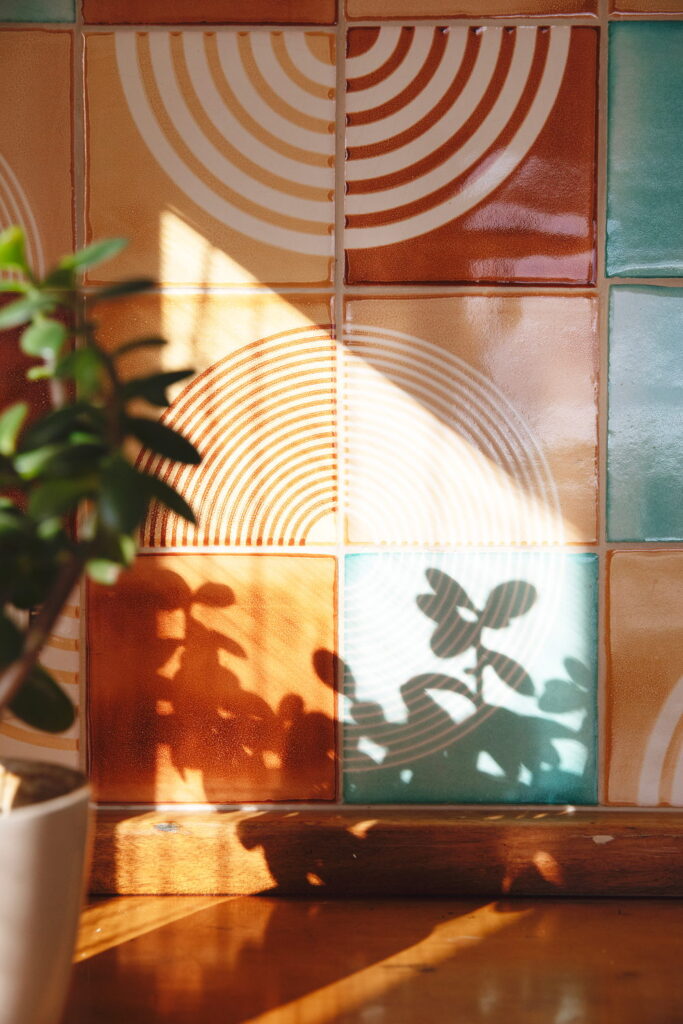
A handmade ceramic tile is formed by hand from wet clay. A handmade tile keeps the marks of its making: softly irregular edges, slight differences in size and a glaze that pools and thins across the surface, giving depth and life to a wall.
Smink Studio tiles are formed by hand in Portugal, then fired, glazed and printed by hand before a second firing.
2. What is the difference between handmade and machine-made tiles?
Mass-produced tiles are usually pressed from dry clay dust under enormous pressure, which makes every tile identical to the next. They are manufactured in automated factories and designed to be uniform: the same size, colour and surface, tile after tile. Handmade tiles are made one at a time, so every tile is a little different. On Smink Studio’s screen-printed tiles the print is also applied by hand, so the individuality of each tile becomes an important part of the look of the finished installation.
There are practical differences too. Handmade tiles take longer to make, usually four to six weeks, and need a tiler experienced in laying them. In return they offer a depth of colour, a texture and a character that pressed or digitally printed tiles struggle to match.
3. Why do handmade tiles vary in colour, size and surface, and is that a defect?
Variation is a natural result of making tiles by hand, and not a defect. Clay shrinks slightly differently as each tile dries and is fired, and glaze settles a little differently on every surface. In independent laboratory tests, the length and width of our tiles varied by about 1–2% from the nominal size, which is typical of handmade tiles.
To even out the small differences in size, Smink Studio recommends grout joints of 2–3mm (1/16–1/8 inch).
4. Are handmade tiles worth the extra cost?
Handmade tiles are not right for every situation, but where they are used they earn their place in beauty and longevity. Each Smink Studio tile passes through many hands: it is formed, dried, fired, glazed, screen-printed and fired again. That labour shows in the depth of colour and texture of the finished wall, and a properly installed ceramic tile can last for hundreds of years.
Spread over the life of a building, the cost of handmade tiles is modest. Many clients use them where they will be seen and enjoyed most: a kitchen splashback, a bathroom wall, a restaurant counter.
See the labour-intensive process for yourself: how Smink Studio tiles are made (video).
5. Will a whole wall of tiles look like the sample tiles?
A sample shows the colours, glaze and texture of Smink Studio tiles, but a whole wall looks richer than any single tile. The small differences between handmade tiles add up across an installation. There is unity in colour and surface without conformity and this aesthetic defines a handmade tile wall. The photos on the Smink Studio website show this effect.
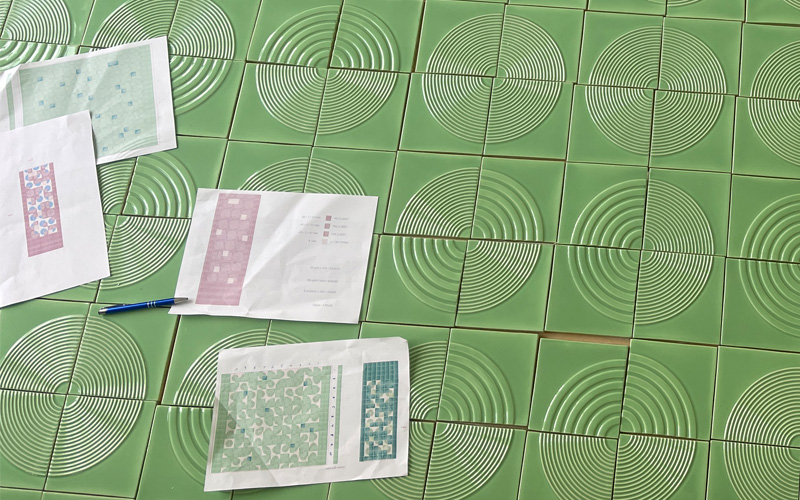
Samples are representative rather than exact. The tiles in a final order come from a different firing, so colours may differ slightly from the sample. Smink Studio’s layout design shows how the chosen tiles will come together across the whole wall.
6. How durable are handmade ceramic tiles, and how long do they last?
Glazed ceramic tiles are among the most durable finishes in any building. Fired at over 1,000°C (1,830°F), Smink Studio tiles are hard, heat-resistant, waterproof on their glazed face and unaffected by sunlight. Properly installed and looked after, they can last for hundreds of years; many buildings in Portugal still carry tiles installed in the 17th century.
7. What is the difference between ceramic and porcelain tiles?
Porcelain is a type of ceramic tile made from a finer clay mix than normal ceramic and pressed under high pressure. It is also fired at a higher temperature, which produces a dense, almost glass-like body. It absorbs very little water (0.5% or less), which makes it hard-wearing. Porcelain tiles tend to be uniform and flat in character. Other ceramic tiles, including Smink Studio’s handmade tiles, have a more porous clay body, finished with a glaze that is itself impervious to water.
Most handmade tiles are ceramic rather than porcelain, because porcelain clay is difficult to shape by hand. On a Smink Studio tile, the glaze provides the colour, depth and protection, while the body beneath gives the tile its handmade form. Smink Studio tiles are frost-tested to –20°C (–4°F) and are suitable for walls, floors, showers and outdoor use.
Tell us about your project.
Whether you have questions about this project or want to start your own projects, we are here to help.