Installing handmade tiles: notes for you and your tiler
1. Do I need a specialist tiler for handmade tiles?
2. What should my tiler know before starting?
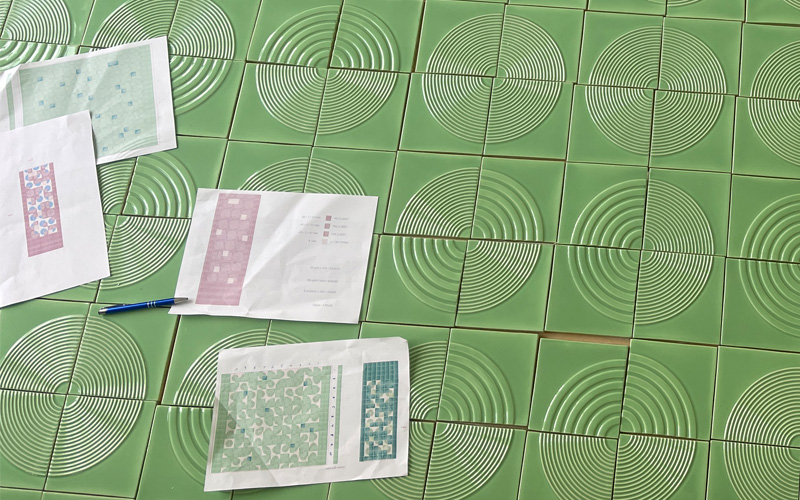
3. Should the tiles be laid out before fixing them to the wall?
4. Which tile adhesive should be used for handmade ceramic tiles?
5. How are handmade tiles cut?
6. How do I finish outside corners and edges without trim tiles?
7. When should I book my tiler?
8. Does the installation need to be waterproof?
9. Should I protect the tiles before grouting?
1. Do I need a specialist tiler for handmade tiles?
Yes, and this is very important. Handmade tiles vary slightly in size and shape, so they take more skill and patience to lay than mass-produced tiles. Choose a tiler who has worked with handmade tiles before, show them the layout design in advance, and expect the job to take longer than standard tiling.
2. What should my tiler know before starting?
The crucial step is to lay out the tiles in the design before starting. Any competent tiler knows that you have to decide where to begin, and that this decides where tiles align across the wall. With a bespoke patterned design, the choice matters even more and features such as bullnose tiles provide a natural starting point. The tiler should also read Smink Studio’s Ceramic Tiles Installation Guide (PDF).
3. Should the tiles be laid out before fixing them to the wall?
Yes. Lay the tiles out on the floor following the layout design, row by row, before any are fixed. This lets the tiler check that every tile is present, see the pattern as a whole and mix tiles from different boxes so that natural variations in colour are spread evenly. It also reveals any breakages before work begins.
4. Which tile adhesive should be used for handmade ceramic tiles?
Any tile adhesive specified for normal ceramic tiles is suitable for Smink Studio tiles. Follow the adhesive manufacturer’s instructions for the surface being tiled, and choose an exterior-grade or flexible adhesive where conditions require one, for instance outdoors, in showers or over underfloor heating.
5. How are handmade tiles cut?
With a wet saw, an electric tile saw with a water-cooled diamond blade. A manual score-and-snap tile cutter will not work on Smink Studio tiles, because they are thicker than most mass-produced tiles: 1cm (3/8 inch) for square wall tiles and 1.4cm (1/2 inch) for subway and floor tiles.
6. How do I finish outside corners and edges without trim tiles?
The neatest finish is a trim tile, and Smink Studio makes bullnoses, pencil tiles and different kinds of caps that can be specified in the layout design. Without them, a tiler can finish exposed edges with a metal edge profile set under the tiles, or plan the layout so that tiled areas end against a wall, worktop or frame. Because the edges of handmade tiles are unglazed, they should not be left bare where they will be seen and may get wet.
7. When should I book my tiler?
Book a tiler provisionally, but confirm the date only once the tiles have arrived and been checked. Production and delivery times for handmade tiles can vary, so a tiler booked for a fixed date may be left waiting. Allow time to unpack, check and lay out the tiles before installation begins.
8. Does the installation need to be waterproof?
Yes, and this is very important. The backs and edges of Smink Studio tiles are unglazed, so water must not be able to reach them. In showers, wet rooms and other wet areas, the wall or floor should be waterproofed before tiling, and every joint must be completely filled with grout.
9. Should I protect the tiles before grouting?
Yes, particularly if you are using a grout that is darker than the tiles, or a polyurethane grout. Apply a wax or oil to the tiles first. This prevents the grout colour from penetrating the fine hairline cracks that can be present in a handmade glazed surface. Follow the product’s instructions for removing any residue once the grout has cured. For more on grout, see All about grout.
Tell us about your project.
Whether you have questions about this project or want to start your own projects, we are here to help.