Screen-printed and Relief tiles
1. What is a screen-printed ceramic tile?
2. How are screen-printed tiles different from hand-painted and digitally printed tiles?
3. What is a Relief tile?
4. Can I screen-print on a Relief tile?
5. Can I combine Relief tiles and screen-printed tiles in a single tile installation?
6. What sizes, shapes and thicknesses do Smink tiles come in?
7. How many colours and patterns can I choose from?
8. What is the difference between gloss and matte glazes?
9. Does Smink Studio make edge, trim or border tiles?
10. Can I combine Smink tiles with plain tiles from another supplier?
1. What is a screen-printed ceramic tile?
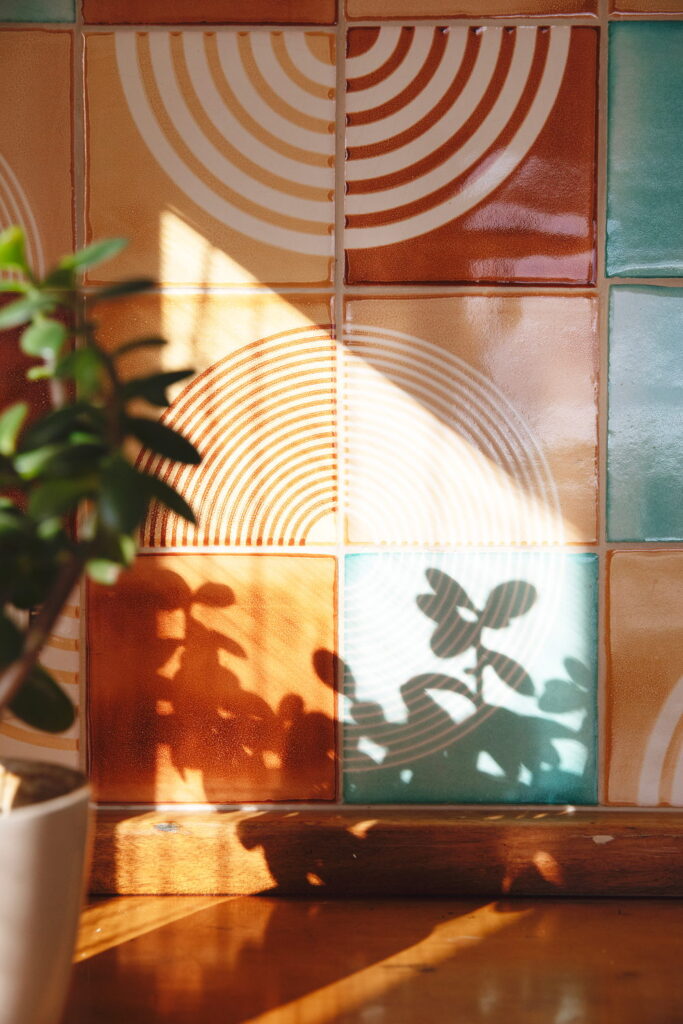
A screen-printed ceramic tile is a handmade tile that carries a pattern printed by hand through a fine mesh screen. At Smink Studio, we often screen-print tiles twice to create overlapping colours and shapes. Each tile is fired once, glazed, screen-printed with a ceramic colour pigment and then fired again. In the kiln the pigment fuses with the glaze, so the pattern becomes a permanent part of the tile’s surface rather than a layer on top of it.
Screen-printing allows both striking and subtle shapes to become part of the tile. Because all Smink Studio screen-printed tiles share the same base glaze (soft white PPWM or cream PPM6), multiple screen-print colours can be combined in one installation. The difference between a normal tile installation and a wall of Smink Studio screen-printed tiles is similar to a custom-made item of clothing vs something bought off the shelf.
2. How are screen-printed tiles different from hand-painted and digitally printed tiles?
Screen-printed tiles are printed by hand, one at a time, through a silk screen mesh, which gives them the crisp shapes of a printed design with the slight irregularity of handwork. Hand-painted tiles are painted freehand with a brush, so each motif varies more. Digitally printed tiles are decorated by industrial inkjet printers, usually on flat, machine-made tiles; they can reproduce any image, but the tile beneath is uniform and the printed shape is always the same.
Screen-printing is an old craft. It originated in China roughly 1,000 years ago and was later refined in Japan. It was adopted in Europe in the early 1900s and became central to the pop art boom of the 1960s.
3. What is a Relief tile?
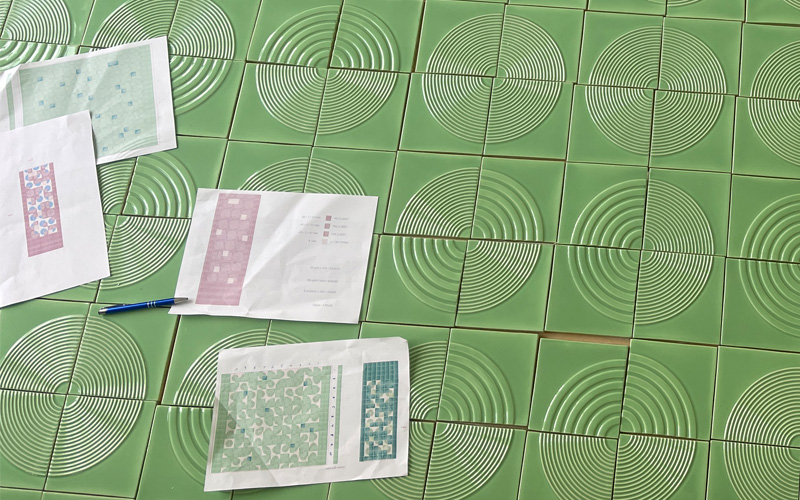
A Relief tile is a handmade tile with a geometric form imprinted into its surface. At Smink Studio, each tile is made by hand and then, before it is dry, pressed individually in a hand-operated press. Once dry, it is fired, glazed and fired again. The glaze collects in the hollows and thins over the raised edges, so the shape shows itself through light and shade.
Each Relief tile has a single solid glaze colour, and the minimum order is 3m² (33 sq ft, about 150 tiles) per colour.
4. Can I screen-print on a Relief tile?
No. Screen-printing needs a flat surface so that the screen touches the tile evenly, and Relief tiles are not flat. A Relief tile carries its pattern in its form and its glaze colour instead.
5. Can I combine Relief tiles and screen-printed tiles in a single tile installation?
Yes, and the result can be very striking. It is particularly easy with Smink Studio tiles because the Relief shapes match the screen-printed shapes, so a printed arch on one tile can echo a pressed arch on another. The usual minimum of 3m² (33 sq ft) per solid glaze colour applies to the Relief tiles but that glaze can be the same white or cream as the screen-printed tiles so that the Relief tiles integrate into the pattern.
6. What sizes, shapes and thicknesses do Smink tiles come in?
Smink Studio’s standard square tile measures approximately 14 x 14cm (5.5 x 5.5 inches) and is 1cm (3/8 inch) thick. Its rectangular subway tile measures 30 x 10cm (which is approximately 12 x 4 inches) and is 1.4cm (1/2 inch) thick.
For floors, Smink Studio makes a thicker 1.4cm (1/2 inch) square tile, pressed to make it flatter and more robust. The studio can make tiles in any size that is feasible, so get in touch if you have a particular size in mind.
7. How many colours and patterns can I choose from?
Clients can choose from the full range of tile designs and colours, and the studio often creates new colours for a particular project. During the design process the team helps each client choose the right combination; three or four print colours together with three or four tile designs often works best, but there is no hard and fast rule.
8. What is the difference between gloss and matte glazes?
A gloss glaze is shiny and reflective. It deepens colours, bounces light around a room and wipes clean very easily, which makes it a natural choice for splashbacks and showers. A matte glaze has a soft, satin finish that absorbs light and gives a calmer, flatter look. Smink Studio recommends matte glazes for floors.
Some Smink Studio colours come in both finishes. For example, M998 is a matte glaze with the look of raw terracotta, and B096 is its gloss counterpart.
9. Does Smink Studio make edge, trim or border tiles?
Yes. Smink Studio makes bullnose tiles, with a rounded glazed edge on whichever side is needed or on several sides, as well as pencil tiles, V-caps, L-caps and many other trim tiles. These finish the ends of tiled areas and the edges of worktops, ledges and niches. As part of the layout design, the studio specifies exactly where trim tiles are needed.
10. Can I combine Smink tiles with plain tiles from another supplier?
It is possible, but requires careful thought. Smink Studio recommends placing samples of both tiles together in the room where they will be installed and assessing how well they combine. Will the grout lines match up? Is the thickness the same? Is the light-reflecting quality of each glaze complementary? Tiles from another supplier may not match Smink tiles in size, thickness or glaze, and a mass-produced tile next to a handmade one can make both look out of place. Smink Studio makes plain tiles in the same base glazes as its screen-printed tiles, so patterned and plain areas sit together naturally.
Tell us about your project.
Whether you have questions about this project or want to start your own projects, we are here to help.